Tag: Volleyball court flooring

  • Low-Maintenance Volleyball Court Flooring Options for High-Traffic Use

    Low-Maintenance Volleyball Court Flooring Options for High-Traffic Use

    Volleyball courts in India are seeing heavier usage than ever before. From schools and colleges to sports academies, housing societies, and public parks—courts are expected to perform daily with minimal downtime. This growing demand has shifted focus toward low-maintenance volleyball court flooring that can withstand high foot traffic without frequent repairs or performance loss.

    This guest guide explores the most practical Volleyball court material options, their impact on Volleyball court construction cost, and how to choose the right surface for long-term value—while keeping both users and Google search intent in mind.

    Why Low-Maintenance Flooring Matters for Volleyball Courts

    High-traffic volleyball courts face constant stress from:

    • Repeated jumps and quick lateral movements
    • Outdoor weather exposure (heat, rain, UV)
    • Heavy daily usage with limited rest periods

    If the flooring system isn’t designed for durability, cracks, peeling, and uneven grip quickly become problems. Choosing the right Volleyball court flooring at the construction stage reduces repair costs and ensures consistent play quality for years.

    Understanding Volleyball Court Construction Basics

    A successful Volleyball court construction project always begins with the foundation. Regardless of surface type, the construction process typically includes:

    • Site leveling and soil compaction
    • Stone or WMM base layers
    • Concrete or asphalt base with proper slope
    • Application of selected volleyball court material
    • Line marking and finishing

    Skipping base quality to reduce Volleyball court construction cost often results in higher maintenance expenses later. For high-traffic courts, a strong base is non-negotiable.

    Best Low-Maintenance Volleyball Court Flooring Options

    1. Synthetic Acrylic Volleyball Court Flooring (Most Recommended)

    Synthetic acrylic is currently the most preferred Volleyball court flooring for outdoor and multipurpose courts in India.

    Why acrylic works best for high-traffic use:

    • Excellent surface grip and slip resistance
    • UV and weather resistant
    • Seamless finish with no joints
    • Easy cleaning and periodic recoating
    • Cost-effective over long-term use

    Acrylic systems are applied in multiple layers over concrete or asphalt, making them ideal for institutions that need durable courts with predictable maintenance schedules.

    2. PU Volleyball Court Flooring (Indoor-Focused)

    PU (polyurethane) flooring is mainly used for indoor volleyball courts with controlled environments.

    Pros:

    • Superior shock absorption
    • Player-friendly cushioning

    Cons:

    • Higher installation cost
    • Not ideal for outdoor or semi-open areas
    • Increased Volleyball court construction cost

    For high-traffic outdoor courts, PU is often less practical compared to acrylic systems.

    3. Modular Sports Tiles (Limited Use Cases)

    Interlocking tiles are sometimes chosen for schools or recreational setups.

    Challenges include:

    • Joint movement over time
    • Uneven ball response
    • Higher replacement frequency

    While tiles may seem affordable initially, their long-term maintenance often outweighs short-term savings.

    Volleyball Court Construction Cost: What Influences It?

    The total Volleyball court construction cost depends on several factors:

    • Choice of volleyball court material
    • Court size (standard or multi-purpose)
    • Base preparation quality
    • Location and labor availability
    • Usage intensity

    Among all options, synthetic acrylic systems offer the best balance between upfront investment and long-term maintenance savings—making them ideal for high-traffic courts.

    Maintenance Comparison: Acrylic vs Other Surfaces

    Flooring TypeMaintenance LevelSuitability for High Traffic
    Synthetic AcrylicLowExcellent
    PU FlooringMediumGood (Indoor only)
    Modular TilesMedium–HighModerate

    Acrylic surfaces require basic cleaning and occasional recoating, while other systems often need frequent part replacements or specialized care.

    Why Choosing the Right Volleyball Court Manufacturer Matters

    Even the best flooring material can fail if installed incorrectly. A reliable Volleyball court manufacturer ensures:

    • Correct layer thickness
    • Proper curing and bonding
    • Consistent surface texture
    • Long-lasting color stability

    Experienced manufacturers also provide technical guidance during volleyball court construction, reducing common issues like surface cracks and drainage failures.

    Why topflooring Is Trusted for High-Traffic Courts

    topflooring is known for delivering durable synthetic sports surfaces designed for Indian playing conditions. As a specialized Volleyball court manufacturer, topflooring focuses on low-maintenance Volleyball court flooring solutions that support heavy daily usage without compromising performance, safety, or surface life.

    Ideal Applications for Low-Maintenance Volleyball Flooring

    Synthetic acrylic volleyball courts are especially suitable for:

    • Schools and colleges
    • Sports academies
    • Housing societies
    • Public playgrounds
    • Multi-purpose sports courts

    These environments demand surfaces that remain playable with minimal downtime and controlled upkeep costs.

    Long-Term Value: Think Beyond Initial Cost

    When planning a volleyball court, focusing only on initial Volleyball court construction cost can be misleading. Flooring systems that:

    • Last longer
    • Need fewer repairs
    • Maintain consistent grip and bounce

    Deliver better long-term value and higher user satisfaction.

    Final Thoughts

    For high-traffic environments, choosing low-maintenance Volleyball court flooring is essential—not optional. Among available options, synthetic acrylic stands out as the most reliable Volleyball court material for outdoor and multi-use courts in India.

    Backed by an experienced Volleyball court manufacturer, the right flooring choice ensures durability, performance, and cost efficiency throughout the court’s lifecycle.
  • Transforming Spaces: Volleyball Court Flooring Options for Maximum Performance

    Transforming Spaces: Volleyball Court Flooring Options for Maximum Performance

    Are you a volleyball enthusiast looking to create a high-performance court for your players? The foundation of any great volleyball court lies in its flooring. Selecting the right volleyball court flooring is crucial for ensuring player safety, maximizing performance, and transforming ordinary spaces into extraordinary game arenas. In this article, we will explore various Volleyball court flooring options that can elevate your game to new heights. Let’s dive in!

    A volleyball court is a dynamic space where athletes showcase their skills, agility, and teamwork. The type of flooring used in a volleyball court significantly impacts the game’s performance, player safety, and overall experience. By selecting the right flooring option, you can create an environment that enhances player performance and reduces the risk of injuries.

    Importance of Volleyball Court Flooring

    Volleyball is a fast-paced sport that involves quick movements, jumps, and dives. The flooring should provide adequate shock absorption, traction, and stability to support these actions. A well-designed volleyball court floor minimizes the strain on players’ joints, enhances agility, and enables smooth movements across the court.

    Hardwood Flooring

    Hardwood flooring is a popular choice for indoor volleyball courts. It offers excellent shock absorption, consistent ball bounce, and a smooth surface for players to move freely. Hardwood floors are commonly made from maple or beech wood, known for their durability and ability to withstand the demands of intense volleyball matches.

    Synthetic Flooring

    Synthetic flooring options, such as polyurethane or vinyl, are gaining popularity due to their versatility and low maintenance requirements. These surfaces provide optimal shock absorption, consistent ball bounce, and improved player comfort. Synthetic floors are available in various thicknesses and can be customized to meet specific performance and aesthetic preferences.

    Rubber Flooring

    Rubber flooring is known for its excellent shock absorption and slip resistance, making it an ideal choice for both indoor and outdoor volleyball courts. It provides a cushioned surface that reduces the risk of injuries and allows players to move with confidence. Rubber floors are durable, easy to clean, and can withstand heavy foot traffic.

    Composite Flooring

    Composite flooring combines the benefits of different materials to create a high-performance surface for volleyball courts. These floors often consist of a top layer of synthetic material, such as polyurethane, and a subfloor made of wood or rubber. Composite flooring offers excellent shock absorption, consistent ball bounce, and enhanced player comfort.

    Versatility of Modular Flooring

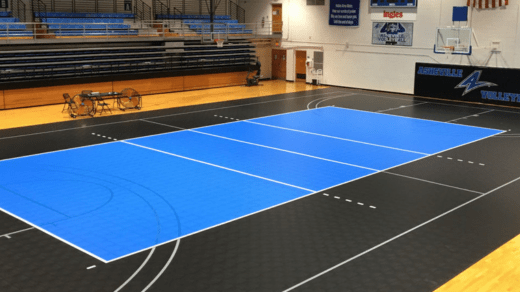
    Modular flooring systems are an innovative option for transforming spaces into volleyball courts. These interlocking tile systems are portable, easy to install, and allow for quick reconfiguration. Modular flooring provides excellent shock absorption, ball response, and durability. It is suitable for indoor and outdoor use, making it a flexible choice for various venues.

    Selecting the Right Flooring for Indoor Courts

    When choosing flooring for indoor volleyball courts, factors such as shock absorption, ball response, and player comfort should be prioritized. Hardwood and synthetic flooring options are popular choices due to their superior performance characteristics. Consider the specific requirements of your facility, including maintenance needs, budget, and aesthetic preferences, to make an informed decision.

    Outdoor Volleyball Court Flooring Considerations

    Outdoor volleyball courts require flooring options that can withstand exposure to the elements. Rubber and composite flooring are excellent choices for outdoor use. They offer durability, weather resistance, and enhanced player safety. Additionally, these surfaces should be designed to drain water efficiently and maintain traction, even in wet conditions.

    Maintenance and Durability

    Regular maintenance is essential for preserving the longevity and performance of volleyball court flooring. Follow the manufacturer’s guidelines for cleaning, refinishing, and repairing the floor. Proper maintenance ensures optimal performance, player safety, and extends the lifespan of the flooring.

    Safety Features

    Player safety is paramount in any sports facility. Consider flooring options with built-in safety features, such as shock absorption and slip resistance. The flooring should provide adequate traction to prevent falls and minimize the risk of injuries. Consult with flooring specialists to ensure compliance with safety standards and regulations.

    Cost Considerations

    The cost of volleyball court flooring varies depending on the material, quality, and installation requirements. Hardwood flooring tends to be more expensive upfront but offers long-term durability. Synthetic, rubber, and composite flooring options provide cost-effective alternatives without compromising performance. Evaluate your budget and long-term maintenance costs when selecting the flooring option that suits your needs.

    Factors to Consider When Choosing Volleyball Court Flooring

    Consider the following factors when selecting volleyball court flooring:

    • Shock absorption
    • Ball response and bounce
    • Player comfort and safety
    • Durability and maintenance requirements
    • Aesthetic appeal
    • Installation and customization options
    • Budget constraints

    Tips for Installation and Maintenance

    • Hire professional installers for proper installation and to ensure the flooring meets industry standards.
    • Follow manufacturer guidelines for maintenance, cleaning, and refinishing.
    • Conduct regular inspections to identify and address any issues promptly.
    • Use appropriate cleaning products and techniques to prevent damage to the flooring.
    • Consider investing in protective covers or mats for high-traffic areas.

    Choosing the right volleyball court flooring is essential for creating an optimal playing environment that enhances performance and safety. Consider the specific needs of your facility, player requirements, and budget constraints when selecting the flooring option. Whether it’s hardwood, synthetic, rubber, composite, or modular flooring, each choice has its unique benefits and considerations. Transform your space into a volleyball haven and elevate the game to new levels with the perfect flooring option.