Category: Technology

  • The Power of Review Management: Building Trust Through Smart Reputation Monitoring

    The Power of Review Management: Building Trust Through Smart Reputation Monitoring

    In today’s digital-first world, your brand’s reputation lives online. A single customer review can influence dozens—sometimes hundreds—of potential buyers. That’s why businesses are investing heavily in review management and proactive strategies to stay ahead of public perception. Whether you’re a startup or an established brand, understanding how to manage and monitor reviews is no longer optional—it’s essential.

    What is Review Management?

    At its core, review management is the process of collecting, analyzing, and responding to customer feedback across various platforms. These platforms can include Google, social media channels, and industry-specific review sites. The goal is simple: improve customer satisfaction and strengthen brand credibility.

    When done right, review management helps businesses identify areas for improvement, resolve customer concerns, and showcase positive experiences. It also allows companies to engage directly with customers, building stronger relationships and encouraging loyalty.

    Why Review Management Matters

    Consumers trust online reviews almost as much as personal recommendations. A strong presence of positive reviews can significantly impact purchasing decisions. On the flip side, negative feedback—if left unaddressed—can damage your reputation.

    By implementing a solid review management strategy, businesses can:

    • Increase trust and credibility
    • Improve customer experience
    • Boost search engine rankings
    • Gain valuable insights into customer needs

    Responding to reviews, both positive and negative, shows that your business values feedback. It humanizes your brand and demonstrates accountability.

    Review Management Netherlands: A Growing Trend

    The importance of review management netherlands has grown rapidly in recent years. Dutch consumers are highly digital-savvy and rely heavily on online reviews before making purchasing decisions. Businesses in the Netherlands are recognizing this shift and adapting their strategies accordingly.

    Companies are increasingly using advanced tools to automate review collection and analysis. These tools help monitor multiple platforms simultaneously, ensuring that no customer feedback goes unnoticed. Additionally, businesses are focusing on localized strategies, tailoring their responses and communication styles to meet the expectations of Dutch consumers.

    This localized approach not only improves engagement but also strengthens brand loyalty within the region.

    The Role of Reputation Monitoring

    Reputation monitoring goes hand-in-hand with review management. It involves tracking what people are saying about your brand across the internet—not just on review sites, but also on forums, blogs, and social media.

    With effective reputation monitoring, businesses can:

    • Detect negative trends early
    • Respond quickly to customer concerns
    • Protect their brand image
    • Stay ahead of competitors

    Real-time alerts and analytics tools make it easier than ever to keep track of online conversations. This proactive approach ensures that potential issues are addressed before they escalate into major problems.

    Best Practices for Effective Review Management

    To get the most out of your efforts, it’s important to follow a few best practices:

    1. Encourage Customer Feedback

    Make it easy for customers to leave reviews. Send follow-up emails, provide direct links, and create a seamless feedback process.

    2. Respond Promptly

    Timely responses show that you care. Acknowledge positive reviews and address negative ones with empathy and solutions.

    3. Stay Professional

    Always maintain a polite and professional tone, even when dealing with criticism. Avoid defensive or emotional responses.

    4. Use Insights to Improve

    Analyze feedback to identify patterns and areas for improvement. Use this information to enhance your products or services.

    5. Leverage Technology

    Invest in tools that automate review collection, sentiment analysis, and reporting. This saves time and ensures consistency.

    The Future of Online Reputation

    As technology continues to evolve, so will the way businesses manage their online presence. Artificial intelligence and machine learning are already playing a significant role in analyzing customer sentiment and predicting trends.

    In the future, businesses that prioritize transparency, authenticity, and customer engagement will stand out. Review management and reputation monitoring will remain critical components of any successful digital strategy.

    Final Thoughts

    Your online reputation is one of your most valuable assets. By investing in effective review management and staying vigilant with reputation monitoring, you can build trust, improve customer relationships, and drive long-term growth.

    In a world where every opinion counts, managing what people say about your brand isn’t just smart—it’s necessary.

  • SEO and GDPR: How European Agencies Handle Compliance and Optimization at the Same Time

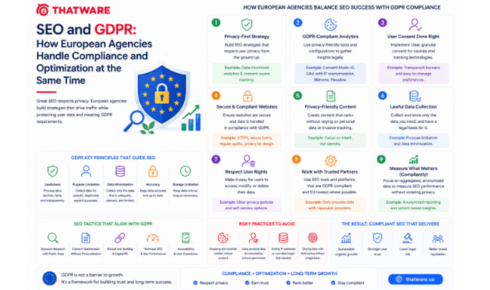
    SEO and GDPR: How European Agencies Handle Compliance and Optimization at the Same Time

    The GDPR conversation in digital marketing usually goes one of two ways. Either it’s dismissed as something the legal team handles and marketing doesn’t need to worry about, or it’s treated as a collection of restrictions that make modern digital marketing impossible. Neither position is useful. Neither is accurate.

    The reality for European brands running SEO programmes is that GDPR compliance and search optimisation can coexist without significant compromise in either direction — but it requires understanding where the actual intersections are, what the real constraints look like, and which of the supposed constraints are real versus misunderstood.

    This is a practical guide to those intersections.

    Where GDPR and SEO Actually Intersect

    The first thing to understand is that GDPR’s direct impact on SEO activity is more limited than many people assume. Most organic search optimisation — creating content, building links, improving technical performance, doing keyword research — doesn’t involve processing personal data and sits entirely outside GDPR’s scope.

    The places where GDPR and SEO genuinely intersect are specific:

    Analytics and tracking. The measurement tools that SEO practitioners use — Google Analytics, Adobe Analytics, and similar — collect and process personal data in ways that GDPR governs. This doesn’t mean you can’t use analytics tools; it means you need appropriate consent mechanisms, data processing agreements with your analytics providers, and data retention settings that comply with your privacy policy.

    Cookie consent and its impact on data collection. Properly implemented cookie consent — which requires genuine opt-in for non-essential cookies in most EU member states — reduces the volume of analytics data collected. Users who decline cookies are not tracked in most analytics implementations, creating data gaps that affect how well you can measure SEO performance.

    Search Console data (which is GDPR-compliant). One of the most useful practical implications of GDPR for SEO practitioners: Google Search Console data is not cookie-dependent and remains fully available regardless of user consent choices. For many SEO measurement purposes, Search Console data is more reliable post-GDPR than analytics data precisely because it doesn’t require cookie consent.

    The Analytics Data Quality Problem

    The most practical GDPR challenge for SEO practitioners in European markets is the degradation of analytics data quality from consent rejection.

    In markets with high privacy consciousness — Germany, Netherlands, France — consent acceptance rates for non-essential cookies can be 50% or lower. This means that the analytics data you’re working with reflects, at best, half of your actual user population. The half that consents may have systematically different behaviour from the half that doesn’t, creating measurement bias that can mislead optimisation decisions.

    Seo agency europe operations working with European clients have had to adapt their measurement methodologies to account for this reality. The approaches that have emerged include:

    Server-side analytics, which processes some data without relying on client-side cookies and can capture more of the user population within appropriate privacy boundaries. Aggregated data modelling, where analytics platforms use statistical modelling to estimate full-population behaviour from the consenting sample. Search Console as a primary data source, with analytics as supplementary context rather than primary measurement.

    None of these approaches fully restores the measurement precision that pre-GDPR analytics provided. But they produce workable insight for SEO decision-making in a compliant environment.

    Consent Management Platform Implementation and Its SEO Implications

    Properly implemented GDPR cookie consent requires a Consent Management Platform (CMP) — the cookie banner system that presents users with consent choices when they visit a site.

    CMP implementation has direct SEO implications that many implementations handle poorly.

    The most common issue: CMPs that block content or page rendering until consent is given. A CMP that prevents page content from loading until the user interacts with the consent banner creates a significant page experience problem — both for users (who experience delay and friction) and potentially for search engine crawlers (which may not be receiving appropriate signals from pages where rendering is consent-blocked).

    CMPs should be implemented in ways that: serve full page content to all users regardless of consent status, allow search engine crawlers to access and index pages normally, don’t create content behind paywalls or gates that crawlers can’t access, and don’t generate crawlable URL variants based on consent state.

    The technical implementation of a GDPR-compliant CMP without compromising crawlability and indexation is a specific technical challenge that European SEO practitioners deal with regularly.

    Content Marketing and GDPR

    The content production side of SEO is largely unaffected by GDPR — creating, publishing, and distributing content doesn’t typically involve processing personal data. But there are a few intersections worth noting.

    Lead magnet and gated content: using content assets to capture email addresses requires appropriate consent language under GDPR. The consent must be separate from the content delivery — bundling “submit your email to download” as implied consent for marketing is not GDPR-compliant. This affects how content lead generation programmes are structured, not whether they can happen.

    On-site search data: if your site tracks what users search for internally, that search data may constitute personal data processing under GDPR depending on implementation. The implications depend on how the data is collected and stored.

    User-generated content: reviews, comments, and user contributions involve personal data considerations around storage, retention, and subject access requests that should be addressed in site design.

    Link Building in the European Privacy Context

    GDPR has a specific and somewhat counterintuitive implication for link building: outreach email requires a legitimate basis.

    Cold email outreach to website owners requesting links — a standard link building practice globally — requires a legitimate basis under GDPR when the recipient is in the EU. The legitimate interest basis can apply for B2B outreach where there’s genuine relevance, but it’s not unlimited permission for mass unsolicited email. This doesn’t eliminate link outreach as a practice, but it creates a need for more targeted, genuinely relevant outreach rather than mass email campaigns.

    The practical response from seo services europe providers has been to move toward higher-quality, more targeted outreach — which tends to produce better links anyway — and to rely more heavily on content-driven link acquisition (creating linkable assets that attract links organically) rather than outreach-driven acquisition.

    The Cross-Border Data Transfer Question

    For European SEO agencies working with tools hosted outside the EU — which includes most of the major SEO toolset (Ahrefs, SEMrush, Screaming Frog cloud, many rank tracking tools) — the cross-border data transfer question is relevant.

    Post-Schrems II, the transfer of personal data from the EU to the US requires either Standard Contractual Clauses (SCCs) or, since the EU-US Data Privacy Framework was adopted in 2023, certification under that framework. Most major SEO tool providers have addressed this through appropriate compliance documentation.

    For European brands using US-based SEO tools, reviewing the data processing agreements and transfer mechanisms in place is a due diligence item — not necessarily a blocker, but something that should be verified rather than assumed.

    Building Compliant, High-Performance SEO in the EU

    The overarching message for European brands approaching SEO compliance is that the constraints are real but manageable, and that compliant SEO practice and effective SEO practice are largely the same thing.

    The brands that treat GDPR as an obstacle to work around tend to create more risk than they realise — both regulatory risk from non-compliant practices and business risk from poor data quality that leads to bad decisions.

    The brands that build compliance into their SEO and analytics infrastructure from the start — with compliant CMPs that don’t compromise crawlability, server-side analytics that maximise compliant data collection, and measurement methodologies that work with the available data — find that they can run effective SEO programmes within the GDPR framework.

    It requires more careful implementation and more sophisticated measurement methodology than pre-GDPR SEO. But it’s entirely workable, and getting it right produces a genuinely competitive advantage over competitors who are running non-compliant programmes that create legal exposure.


  • Geared DC Motor: Explore Innovation with a Bluetooth Modular System

    Geared DC Motor: Explore Innovation with a Bluetooth Modular System

    In the modern era of electronics and robotics, hands-on learning is essential for students, hobbyists, and tech enthusiasts. A geared dc motor is a versatile component that allows precise control of speed and torque, making it perfect for a wide range of projects. When combined with a bluetooth modular system, it opens up exciting possibilities for remote control and automation, enhancing both the learning experience and practical applications.

    A geared DC motor is essentially a DC motor connected with a gearbox that reduces speed and increases torque. This makes it ideal for robotics, automation systems, and mechanical projects requiring controlled movement. The gear reduction allows learners to understand mechanical principles like torque, load distribution, and gear ratios. By experimenting with a geared DC motor, students gain practical insights into how motion and force can be managed in real-world machines.

    Bluetooth modular systems provide an accessible way to wirelessly control electronic devices. Using a Bluetooth module, users can communicate with microcontrollers or motors via smartphones or tablets. This integration allows learners to build projects that respond to remote commands, such as moving a robot, controlling a motorized door, or even adjusting a camera position. Combining a geared DC motor with a Bluetooth modular system teaches students the basics of wireless communication, control circuits, and programming.

    One of the major benefits of using these components together is the educational value they provide. Students not only learn about electronics and mechanical systems but also about integrating different technologies to create functional devices. For example, a Bluetooth-controlled robot with geared DC motors can navigate obstacles, carry small loads, or perform specific tasks. These projects foster problem-solving, critical thinking, and innovation, all key aspects of STEM education (Science, Technology, Engineering, and Mathematics).

    Practical projects using geared DC motors and Bluetooth modular systems can vary from simple to complex, depending on the learner’s skill level. Beginners may start with basic motor control experiments to understand speed regulation and direction change. Advanced learners can incorporate sensors, microcontrollers, or even artificial intelligence modules for more sophisticated projects. This step-by-step learning approach ensures that students remain engaged, motivated, and challenged while gradually expanding their knowledge.

    Safety and convenience are important considerations. Pre-designed kits and modular systems provide all necessary components, clear instructions, and safety features, enabling learners to focus on experimentation rather than sourcing parts or troubleshooting hazards. The modular approach allows users to assemble and disassemble components easily, making it suitable for classrooms, hobby labs, or home-based projects.

    Another advantage of combining a geared DC motor with a Bluetooth modular system is that it encourages creativity and innovation. Students can customize their projects, design their own robotic vehicles, or even develop automation solutions for home or school purposes. The integration of wireless control adds a layer of interactivity that makes learning fun and engaging. It also demonstrates how technology can solve real-world problems, enhancing practical understanding.

    Collaborative projects using these components further enhance learning. Students working in teams can share ideas, troubleshoot together, and develop communication and teamwork skills. Completing a functional Bluetooth-controlled motor project gives learners a sense of achievement and inspires them to take on more advanced experiments in electronics and robotics.

    In conclusion, a geared DC motor paired with a Bluetooth modular system provides a comprehensive and interactive learning experience. These components teach mechanical principles, electronics, wireless communication, and problem-solving skills in a hands-on, practical manner. Ideal for students, hobbyists, and innovators, these projects promote STEM education, spark creativity, and prepare learners for advanced studies and future careers in technology, robotics, and automation.

  • ZeroPayBank’s Next Leap: How Multi-Factor Authentication Can Redefine Micropayment Security

    ZeroPayBank’s Next Leap: How Multi-Factor Authentication Can Redefine Micropayment Security

    1. Understanding the Shift in Mobile Micropayment Security

    The digital payments landscape is evolving rapidly, and with it comes an ever-growing need for security. Particularly in the realm of micropayments—transactions typically under $50—the balance between user convenience and fraud prevention becomes delicate. As services like ZeroPayBank eye global expansion, embracing robust security without compromising usability is no longer a bonus; it’s a baseline expectation.

    At the heart of this transformation lies multi-factor authentication (MFA)—a security protocol that requires users to verify their identity using two or more independent credentials: something they know (password), something they have (device), and something they are (biometric data).

    1. What Is Multi-Factor Authentication (MFA)?

    MFA is more than just an extra password. It’s a layered security system designed to block unauthorized access even if one credential is compromised.

    • Something you know: PIN, password, or a security question.
    • Something you have: smartphone, USB security key, or OTP token.
    • Something you are: fingerprint, face scan, voice recognition.

    By combining these elements, MFA drastically reduces the chances of identity theft, account takeovers, or payment fraud.

    1. Why It Matters for Micropayments

    Micropayments might seem too small to bother with security, but they’re frequent and volume-heavy—making them ripe targets for cyber attackers. A single breach can involve thousands of micro-transactions being siphoned silently over time.

    소액결제 platforms that ignore authentication vulnerabilities may find themselves exposed to fraudulent chargebacks, user churn, and regulatory backlash.

    1. ZeroPayBank’s Opportunity: Redesigning Trust Through MFA

    ZeroPayBank, with its reputation as a fast and user-focused micropayment platform, is uniquely positioned to lead the next wave of mobile payment security by embedding multi-factor protocols at key access points:

    Authentication PointRecommended MethodUser Impact
    App loginBiometric + OTPHigh trust, low friction
    Transaction confirmationDevice-bound OTPQuick verification
    Account recoverySecurity question + biometricReduced fraud
    New device registrationEmail confirmation + fingerprintHigh security

    This layered approach not only secures user accounts but also builds long-term loyalty by demonstrating commitment to user safety.

    1. Step-by-Step Guide: Deploying MFA in Micropayment Systems
    2. User Device Binding: Require users to register devices before making payments. This limits access to trusted hardware.
    3. Session Expiry Enforcement: Use short-lived session tokens that auto-expire after inactivity.
    4. Biometric First, Password Last: Encourage biometric logins as the default, keeping passwords as backup.
    5. Real-Time Threat Monitoring: Combine MFA with anomaly detection tools to spot unusual behaviors (e.g., payments from new geolocations).
    6. Fallback Gracefully: Offer secure recovery options like identity verification through encrypted channels.
    7. Pros and Cons of Using MFA for Micropayments
    ProsCons
    Significant fraud reductionSlight delay in transaction speed
    Enhanced user trustIncreased setup complexity
    Better compliance with regulationsSome user resistance to change
    Scalable for global useRequires ongoing maintenance
    1. Smart Security Strategies to Future-Proof ZeroPayBank
    2. Tokenized Micropayment Architecture: Replace sensitive data with unique tokens in each transaction.
    3. Biometric Trust Score Integration: Assign dynamic risk scores based on behavior and biometric accuracy.
    4. Decentralized Key Storage: Avoid single points of failure by distributing cryptographic key management.
    5. In-App Adaptive Security Prompts: Trigger extra authentication only when risk rises—e.g., new IP, unusual time, large volume.
    6. Privacy-First UX: Show transparency about where and how user data is stored, building confidence through design.
    7. FAQs About MFA in Micropayment Systems

    Q1: Isn’t MFA overkill for small transactions?
    A1: Not when fraud occurs at scale. Even $1 transactions, if repeated across thousands of accounts, can cause huge losses.

    Q2: Will MFA slow down the user experience?
    A2: Properly designed, it won’t. Face ID, fingerprint sensors, and push notifications now make MFA nearly seamless.

    Q3: Is ZeroPayBank planning to roll this out globally?
    A3: While not officially confirmed, ZeroPayBank’s infrastructure is already being positioned for multi-regional expansion.

    1. Challenges and How to Overcome Them
    • User Drop-off During Setup: Provide clear onboarding with skip-and-return options.
    • Device Compatibility: Ensure fallback methods exist for older phones.
    • Privacy Concerns: Let users opt out of certain data-sharing elements without locking them out entirely.
    1. Final Thoughts: Future-Proofing Micropayment Trust

    In a world where trust equals traction, 휴대폰 소액결제 현금화 ZeroPayBank’s embrace of multi-factor authentication isn’t just a defensive move—it’s an offensive strategy to redefine what secure, seamless, and scalable micropayments should look like in 2025 and beyond.

    Security innovation, when done right, doesn’t slow down progress. It fuels it.

  • The Rise of App-Controlled Emergency Generators for Home

    The Rise of App-Controlled Emergency Generators for Home

    As technology continues to evolve, so does the way we manage our home energy solutions. One of the most exciting advancements in the realm of emergency generators is the ability to control them via smartphone apps. This feature is becoming increasingly popular, offering homeowners greater convenience and flexibility in managing their power needs. In this blog, we’ll discuss why more emergency generators for home are incorporating app controls and introduce the Jackery Solar Generator 2000 Plus, which excels in this area.

    Why App Control is Becoming Essential for Emergency Generators

    1. Convenience and Accessibility

    Controlling your emergency generator through an app allows for seamless operation from anywhere in your home. Whether you’re in the living room or outside enjoying your garden, you can monitor and manage your generator without needing to be physically present. This convenience is especially valuable during emergencies when quick responses are necessary.

    2. Real-Time Monitoring

    App integration enables real-time monitoring of essential metrics such as battery levels, power input/output, and remaining runtime. This visibility allows homeowners to make informed decisions about power usage and ensures that they can act quickly if the situation changes.

    3. Customization Settings

    With app controls, users can customize settings according to their specific needs. Whether you want to adjust the power-saving mode or set timers for charging, having these options at your fingertips enhances user experience and optimizes energy management.

    4. Enhanced Features

    Modern app-controlled generators come equipped with advanced features that improve functionality and efficiency. For example, you can activate a silent mode for charging or set energy-saving schedules, all tailored to fit your lifestyle.

    Introducing the Jackery Solar Generator 2000 Plus

    For those looking for an emergency power station with solar panel that integrates cutting-edge technology, the Jackery Solar Generator 2000 Plus is an excellent choice. Here’s what makes it stand out:

    Multiple Connection Methods

    The Jackery Solar Generator 2000 Plus features dual-mode communication via Bluetooth and WiFi, making it suitable for both outdoor and indoor scenarios. This flexibility allows you to control the generator no matter where you are.

    Customization Settings

    Through the app, you can remotely control the device, view battery levels, monitor power input/output, and check available runtime in real-time. These user-customizable settings ensure that you’re always in control of your energy needs.

    Advanced Features

    – Power Saving Mode: Extends battery life, ensuring your generator lasts longer during outages.

    – Fast Charging Silent Mode: Enables silent charging with noise levels ≤30dB, perfect for maintaining a peaceful environment.

    – Energy Saving Mode: Allows you to set a duration for energy-saving features via the app, optimizing power usage according to your needs.

    Conclusion

    The incorporation of app controls in emergency generators is transforming the way homeowners manage their power solutions. The Jackery Solar Generator 2000 Plus exemplifies this trend, offering multiple connection methods, real-time monitoring, and advanced customization features. By embracing technology, you can ensure that your home remains powered and manageable, even in the face of unexpected outages. Equip your home with the Jackery Solar Generator 2000 Plus and take control of your energy needs with confidence!

  • Boost Productivity Instantly with Supa: Your All-in-One AI Assistant for Smarter Work

    Boost Productivity Instantly with Supa: Your All-in-One AI Assistant for Smarter Work

    In today’s fast-moving digital era, mastering time management is essential. Whether you’re a student juggling deadlines or a professional overwhelmed with documents, emails, and presentations — there’s a smarter way to work. Meet **Supa**, your AI-powered teammate designed to help you work smarter, not harder.

    What Is Supa?

    **Supa** is a powerful, web-based AI platform that simplifies complex tasks across various fields. From writing academic papers and business proposals to designing presentations and automating outreach emails — Supa does it all, up to **100 times faster** than doing it manually.

    It’s powered by the most advanced AI models available today: **ChatGPT 4.1, Gemini 2.5, Llama 4, Qwen 2.5**, and **Deepseek V3**. You can choose the best model for your task and let Supa do the heavy lifting — making it ideal AI for Student, entrepreneurs, marketers, HR AI for Professionals, and more.

    By subscribing to Supa, users gain access to premium features from multiple AI models — at a fraction of the cost of subscribing to them individually.

    Supa’s Top Time-Saving Features

    1. **AI-Powered Presentations**

    Need a professional presentation in minutes? Supa creates slide decks complete with images, graphics, data tables, and thoughtful design. Unlike other tools that only generate text, Supa delivers fully designed Create Presentations with AI— ready to download and present, instantly.

    2. **Document Writing Made Effortless**

    Supa generates complete documents — essays, reports, theses, or proposals — including citations, figures, and visuals. It’s perfect for anyone who wants clean, accurate, and publish-ready output without spending hours formatting.

    3. **Automated Resume Screening**

    HR teams can cut down hours of manual screening. Supa scans, filters, and highlights top candidates from a large pool of resumes — ideal for high-volume recruitment processes.

    4. **AI Email Automation**

    Need to reach out to a large audience? Supa creates and sends personalized, professional emails at scale — fast and reliably. Great for marketing teams, campaign managers, and anyone needing consistent outreach.

    Why Supa Stands Out

    ✅ Speed up your workflow with high-quality AI-generated output
    ✅ Say goodbye to repetitive tasks like formatting and research
    ✅ Get better results using top-tier AI models in one place
    ✅ Enjoy cost-effective access with a single, affordable subscription

    Who Should Use Supa?

    * **Students**: For writing essays, doing research, and creating presentations effortlessly
    * **Professionals**: To handle everyday tasks faster and focus on strategic work
    * **HR & Recruiters**: To automate CV screening and candidate sorting
    * **Teams & Creatives**: To save time with high-quality outputs in seconds

    Start Working Smarter Today

    Don’t let repetitive tasks slow you down. Let Supa take over and unlock your full productivity potential.

    Visit http://www.supa.inc to get started
    Follow **@hiresupa** on Instagram for AI tips, user success stories, and updates.

  • Revolutionizing Connectivity: Guest WiFi Solutions and Network Management in Student Housing

    Revolutionizing Connectivity: Guest WiFi Solutions and Network Management in Student Housing

    In today’s hyper-connected world, reliable internet access is more than a luxury—it’s a necessity. Nowhere is this more evident than in student housing, where hundreds of tech-savvy residents depend on seamless, high-speed internet for both academic and personal use. The increasing demand has made guest WiFi solutions and advanced network infrastructure essential for modern residential properties. To meet these evolving needs, property owners and developers are turning to comprehensive property-wide WiFi solutions, managed services, and robust network management systems.

    Why Guest WiFi Solutions Matter

    Guest WiFi is no longer limited to hotels and cafes. In student housing and multifamily properties, offering high-quality guest WiFi is a valuable amenity. It allows visitors, maintenance personnel, and temporary residents to access the internet securely without compromising the main network. A dedicated guest network also minimizes congestion and maintains the performance of the core resident WiFi. Moreover, properly managed guest WiFi provides usage analytics, security controls, and access limitations that protect both users and infrastructure.

    Student Housing Technologies: Meeting Modern Expectations

    Student housing technologies have undergone rapid transformation to keep pace with the digital habits of Gen Z. Today’s students arrive on campus with multiple connected devices, from smartphones and laptops to gaming consoles and smart TVs. Traditional routers and outdated networks simply can’t support the bandwidth or speed these users demand.

    To stay competitive, property managers are investing in smart student housing technologies that include app-based maintenance requests, smart locks, automated lighting, and cloud-managed WiFi networks. These innovations enhance the student experience while increasing operational efficiency for the property management team. One key component of these technologies is property wide WiFi solutions, which eliminate dead zones and ensure consistent connectivity throughout the entire residence, from individual rooms to communal spaces.

    The Value of Property Wide WiFi Solutions

    Property-wide WiFi is the backbone of modern residential internet. Unlike piecemeal networks that require individual routers per unit, a unified WiFi system delivers seamless coverage to every corner of the property. Whether students are studying in their rooms, streaming in common areas, or video chatting in outdoor courtyards, a centralized WiFi solution guarantees uninterrupted connectivity.

    These systems use enterprise-grade hardware and intelligent routing protocols to balance network traffic and avoid bottlenecks. This not only improves user experience but also allows property managers to oversee performance, detect issues, and deploy fixes remotely.

    Managed Services: Outsourcing for Excellence

    Managing a large-scale WiFi network in student housing can be a complex task. That’s where managed services come into play. Managed service providers (MSPs) offer 24/7 monitoring, proactive maintenance, and on-call technical support, allowing property staff to focus on resident satisfaction rather than troubleshooting internet issues.

    MSPs also bring expertise in cybersecurity, ensuring that the network is protected against unauthorized access and potential threats. Their services typically include automatic updates, firmware patches, and intrusion detection systems, offering peace of mind for both property owners and residents.

    The Role of Network Management in Long-Term Success

    Effective network management is the foundation for maintaining a reliable and scalable internet infrastructure. With advanced network management tools, property managers can gain real-time insights into bandwidth usage, device connectivity, and system health. These tools allow for dynamic resource allocation, ensuring that the network can adapt to fluctuating demands, such as midterms or final exams when internet usage spikes.

    Additionally, a well-managed network reduces downtime, lowers maintenance costs, and supports future upgrades like 5G integration or IoT device expansion. Investing in strong network management today paves the way for long-term success and resident satisfaction.

    Conclusion

    As student housing becomes more competitive and tech-driven, offering exceptional internet services is no longer optional—it’s a requirement. By leveraging managed services and implementing scalable guest WiFi and property-wide solutions, property owners can deliver high-speed, reliable connectivity that meets the demands of modern students. In doing so, they not only enhance resident experience but also future-proof their investments for the digital age.

  • Power Delivery for Quantum Systems: Rethinking Semiconductor Voltage Management

    Power Delivery for Quantum Systems: Rethinking Semiconductor Voltage Management

    Quantum computing systems are redefining how power is distributed, regulated and controlled within semiconductor environments. Unlike classical processors that operate at predictable voltage and current levels, quantum systems introduce extreme sensitivities and cryogenic conditions that challenge conventional power delivery architectures. Erik Hosler, a specialist in cryo-optimized semiconductor systems, emphasizes how rethinking voltage management is critical to sustaining coherence and control in scalable quantum devices.

    Quantum platforms rely on precision, stability and isolation far beyond what traditional electronics require. This is forcing engineers to innovate not just around the quantum hardware itself but also around how energy flows through and around those systems. The evolution of quantum power delivery is reshaping the relationship between semiconductor design, packaging and control infrastructure.

    Quantum Requirements that Redefine Power

    Classical power delivery networks are built for speed, density and efficiency. Power flows through hierarchical regulators, integrated passives and bulk capacitors to feed logic cores, memory banks and Input/Output systems. In contrast, quantum systems typically operate at millikelvin temperatures and require ultra-low-noise environments. Even small fluctuations in voltage can introduce decoherence or measurement error.

    Qubits based on superconducting circuits, trapped ions or spin states have extremely narrow tolerance windows for supply voltage. Some require voltage steps as small as microvolts or current biasing below one nanoampere. This level of control is outside the operating range of most commercial regulators, necessitating new power management solutions that operate with higher granularity and thermal isolation.

    These constraints impact everything from power conversion topology to the physical placement of regulators. Engineers must balance the need for precision with the need to minimize heat generation, electromagnetic interference and physical footprint inside the cryostat.

    Cryogenic Compatibility in Power Regulation

    One of the core challenges in quantum power delivery is operating at cryogenic temperatures. Standard voltage regulators, even those designed for low-power applications, do not function predictably below 77 kelvin. At millikelvin ranges, common materials change conductivity, components shift parameters and energy dissipation becomes critical.

    Cryo CMOS is emerging as a key technology to address these issues. These circuits are designed specifically to regulate power, switch signals and process data under deep cryogenic conditions. By integrating cryogenic power delivery on the same substrate or package as the qubits, latency and thermal leakage can be minimized.

    New passive components that operate reliably at low temperatures are also being developed. These include cryo-stable capacitors and resistors with minimal temperature coefficients. These components allow fine-tuned voltage management circuits to operate without thermal drift or instability.

    Minimizing Noise and Ground Loop Effects

    Quantum systems are acutely sensitive to electrical noise. Voltage ripple, electromagnetic radiation and ground bounce can all degrade qubit fidelity. Power delivery networks must, therefore, prioritize isolation, filtering and grounding strategies that go well beyond conventional chip-level designs. External connections use shielded cables, twisted pair routing and ferrite beads to reduce conducted and radiated emissions. Internally, low-dropout regulators, decoupling capacitors, and shielded enclosures help stabilize supply voltages close to the qubit.

    Multilayer packages are being explored to route power and ground planes with minimal impedance variation. This helps maintain voltage reference levels across the system and reduces the chance of coupling between high-speed classical logic and fragile quantum states.

    Erik Hosler explains, “AI-driven tools are not only improving current semiconductor processes but also driving the future of innovation.” In quantum system development, these tools are being used to simulate power distribution at cryogenic temperatures, analyze noise sources and optimize regulator placement. This kind of data-driven modeling enables more efficient, scalable power architectures that account for both physical constraints and quantum performance.

    Managing Thermal Load Through Power Design

    Thermal management is a limiting factor in any quantum computer. Cryogenic refrigeration systems have extremely limited cooling capacity, especially below 1 kelvin. Power delivery solutions must, therefore, be designed to operate with minimal energy loss and heat generation. This means using high-efficiency regulators with low quiescent current, minimizing parasitic leakage and physically separating power delivery from thermal bottlenecks. Even milliwatts of excess dissipation can exceed the capacity of a dilution refrigerator, so every element in the power path must be optimized for low heat output.

    Some quantum systems use staged power delivery, where bulk conversion occurs at higher temperatures and fine regulation occurs close to the qubit layer. This multi-temperature architecture helps balance efficiency with performance, routing high-power functions away from the most sensitive zones. Material selection also plays a role. Conductors with low thermal conductivity but high electrical performance, such as phosphor bronze, are used in cryogenic cabling. These choices help deliver power without creating thermal shortcuts that compromise the cold environment.

    Scaling Power for Multi-Qubit Systems

    As quantum processors scale from tens to hundreds of qubits, power delivery becomes more complex. Each qubit may require dedicated biasing, gating and readout circuitry, all of which must be coordinated without introducing crosstalk or latency. To manage this, modular power delivery architectures are being developed. These include programmable biasing units that can tune voltage levels for each qubit and matrixed distribution networks that adapt to circuit layout. Scalability depends on keeping these systems compact, reproducible and thermally efficient.

    Digital interfaces between control electronics and power modules must also be cryo-compatible. Researchers are designing low-bandwidth digital protocols that can communicate configuration settings without warming up the quantum zone. These interfaces allow dynamic adjustment of power parameters as qubit workloads change. Wafer-level integration and 3D packaging are being explored to embed power components closer to the action. By stacking regulation and control layers beneath or beside the qubit plane, engineers can reduce wire length, improve response time and shrink the overall system footprint.

    Coordinating Classical and Quantum Domains

    Power delivery is one of the key interfaces between classical and quantum systems. It must enable high-performance operation on both sides without disrupting either. This coordination requires close collaboration between power IC designers, quantum physicists and packaging engineers. Tools for co-simulation of analog power networks and quantum circuits are emerging, allowing teams to analyze mutual impact during design. Thermal models now include qubit sensitivity thresholds, helping teams determine where regulation can safely occur.

    Standardized power modules with cryo-tested specs are becoming available, making it easier to design repeatable systems. These building blocks are reducing integration efforts and opening the door to faster prototyping in the quantum space. Research into optical power delivery, superconducting power lines and energy-efficient quantum logic may further reshape how energy flows through next-generation quantum machines.

    Powering the Next Era of Quantum Design

    As quantum computing matures, power delivery will be as much a defining feature as qubit fidelity or gate speed. Without stable, efficient voltage management, no quantum system can function on a scale. Innovations in cryogenic regulation, low-noise layout and modular distribution are making it possible to bridge the classical-quantum divide with energy-aware design.

    Engineers are reimagining how to deliver power not just where it is needed but how it is shaped, shielded and synchronized. These breakthroughs will be critical to unlocking the performance and scalability required for commercial quantum computing.

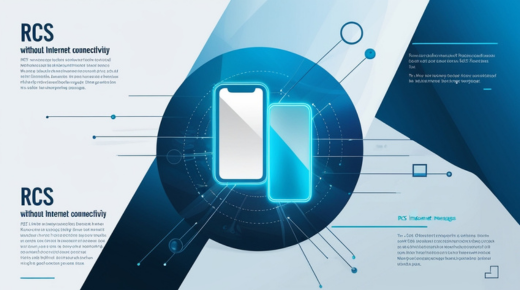
  • How RCS Messages Work Without an Internet Connection

    How RCS Messages Work Without an Internet Connection

    In recent years, Rich Communication Services (RCS) has emerged as the next big step in the evolution of mobile messaging. Touted as the successor to SMS and MMS, RCS brings many of the features users love from apps like WhatsApp, iMessage, and Telegram—such as read receipts, typing indicators, high-resolution media sharing, and more. But one question often arises among users: Can RCS message work without an internet connection? And if so, how?

    To understand how RCS functions with and without internet connectivity, we need to dive into how the protocol works, what conditions affect its operation, and how fallback systems like SMS/MMS play a role.

    What is RCS Messaging?

    RCS (Rich Communication Services) is a messaging protocol designed by the GSMA (GSM Association) to replace the aging SMS and MMS formats. Unlike SMS, which sends plain text over a cellular network, RCS uses mobile data or Wi-Fi to send messages that can include rich media and interactive features.

    Key features of RCS include:

    • High-resolution image and video sharing
    • Read receipts and typing indicators
    • Group chats with enhanced media
    • Business messaging with branding and chatbots
    • Location sharing and file transfers

    RCS is embedded in modern messaging apps like Google Messages, and when supported by your mobile carrier, it turns the default SMS app into a more modern, interactive messaging platform.

    The Role of Internet in RCS Messaging

    At its core, RCS requires an active data connection—either via Wi-Fi or mobile data—to function. Unlike SMS and MMS, which operate over the standard cellular network infrastructure, RCS uses IP-based messaging.

    Here’s what that means:

    • When RCS messaging is enabled, your messages are sent via the internet, much like how WhatsApp or Telegram work.
    • Google uses its own servers (such as Google Jibe) to route RCS messages when your carrier does not support RCS natively.
    • If both the sender and the receiver have RCS enabled and are online, the experience is seamless and feature-rich.

    But what happens when there’s no internet connection?

    Can RCS Work Without an Internet Connection?

    The short answer is: No, RCS cannot function without an internet connection. However, there’s a built-in fallback mechanism to ensure messages still go through.

    Here’s how it works:

    1. Fallback to SMS or MMS

    If your device is not connected to the internet—either through Wi-Fi or mobile data—the RCS message fails to send via the IP channel. However, Google Messages and other RCS-compatible apps are smart enough to automatically fall back to sending the message as a standard SMS or MMS, depending on the message type.

    • Text-only messages are sent as SMS.
    • Media messages (images, videos) are sent as MMS, though they will be heavily compressed and may be delayed depending on network conditions.

    This fallback ensures message delivery is prioritized, even if the enhanced features of RCS are temporarily unavailable.

    2. What the User Sees

    When a message is downgraded from RCS to SMS or MMS, the user is usually notified with a small icon or message indicating this change. The recipient won’t necessarily notice the difference unless they pay attention to features like read receipts or media quality.

    How Does This Compare to Other Messaging Apps?

    Apps like WhatsApp bot app, Telegram, and Signal require an internet connection at all times. If you try to send a message on these apps without Wi-Fi or mobile data, the message is simply held in a queue until the internet is restored. There is no fallback option like SMS unless you manually switch to another app.

    This is where RCS stands out. It gives users the flexibility of internet-based messaging with the reliability of SMS backup when needed.

    What Happens When the Recipient Has No Internet?

    Another important scenario to consider is when you have internet access, but the recipient does not.

    In this case:

    • Your RCS message will attempt to send over the IP channel.
    • If the recipient’s phone is not connected to the internet, the message will not be delivered immediately.
    • Depending on the app settings, your message may either stay in “sending” mode, or the app may prompt you to send the message as an SMS/MMS instead.
    • Some apps allow you to configure this behavior manually—whether to wait or switch to SMS/MMS after a set time.

    How to Check If RCS Is Enabled on Your Device

    If you’re unsure whether you have RCS messaging enabled, follow these steps on most Android devices using the Google Messages app:

    1. Open the Messages app.
    2. Tap the three-dot menu in the top-right corner.
    3. Go to Settings > Chat features.
    4. Make sure “Enable chat features” is turned on.

    Here, you’ll also find information like:

    • Chat status (Connected or Disconnected)
    • Send read receipts
    • Automatically resend as text (SMS/MMS)

    The last option is particularly important for ensuring messages are still sent even if RCS isn’t available.

    Benefits of This Hybrid Functionality

    Reliability

    The ability to fall back to SMS/MMS means users aren’t left wondering whether a message went through when the internet is spotty or unavailable.

     Seamless User Experience

    You don’t need to switch between different apps just to send a basic message when offline. The same app (like Google Messages) can handle RCS, SMS, and MMS seamlessly.

    No Account Setup Required

    Unlike WhatsApp or Telegram, RCS uses your phone number and doesn’t require account creation or logging in. This makes the fallback system even smoother—no setup, just messaging.

    Limitations and Considerations

    While RCS’s hybrid model is a huge step forward, it’s not perfect:

    Media Quality

    If your message falls back to MMS, the media will be heavily compressed, and quality will suffer.

     iOS Compatibility

    As of now, iPhones do not support RCS. So, messages from Android RCS users to iPhones fall back to traditional SMS/MMS automatically.

    No End-to-End Encryption on SMS/MMS

    Unlike RCS (which has some encryption capabilities) or apps like Signal, SMS and MMS are not encrypted—which may concern privacy-focused users.

    Future of RCS: Offline Capabilities?

    As of 2025, there are no implementations of offline RCS messaging similar to Bluetooth-based or peer-to-peer options seen in select apps. However, with the push for decentralized messaging and satellite connectivity, it’s plausible that future versions of RCS could support offline relay or delayed syncing via carrier-grade enhancements or integration with mesh networks.

    RCS messaging is a powerful upgrade to traditional SMS and MMS, offering a rich set of features that modern users expect from messaging apps. While it does rely on internet connectivity, the built-in fallback to SMS/MMS ensures your message is delivered even when the internet is unavailable.

    This hybrid functionality makes RCS uniquely versatile—offering the best of both worlds: the reliability of carrier-grade messaging and the richness of IP-based apps. As adoption continues to grow and infrastructure improves, RCS is set to redefine how we communicate—whether we’re online or not.

    So, if you’re looking for a messaging option that keeps working even in poor connectivity, RCS is worth exploring—especially with Google Messages on Android.

  • Apple Watch Series 10 & Ultra: Redefining the Future of Smartwatches

    Apple Watch Series 10 & Ultra: Redefining the Future of Smartwatches

    Apple’s latest additions to its wearable lineup—the Apple Watch Series 10 and the Apple Watch Ultra—take innovation and functionality to new heights. These smartwatches combine style, strength, and smart features to meet the needs of modern users. Whether you’re a fitness-focused user, a tech enthusiast, or someone who needs a reliable device for outdoor challenges, the new Apple Watch lineup is built to impress.

    Apple Watch Series 10: Smart, Sleek, and Smarter Than Ever

    The Apple Watch Series 10 stands out with its refined design and powerful new features, offering a smooth and intelligent user experience. Designed for everyday use, this model enhances daily routines with better performance and health monitoring.

    Top Features:

    • Next-Gen Display: Rumored to feature microLED technology, the Series 10 could offer brighter visuals and improved energy efficiency.
    • Health Advancements: Apple is expected to introduce enhanced sleep tracking, as well as new sensors for blood pressure and stress level detection.
    • Performance Boost: A more advanced chipset powers faster app loading, smoother transitions, and efficient background processes.
    • Battery Efficiency: Optimized power management may provide users with extended usage between charges.

    Whether you’re managing your fitness goals, staying on top of notifications, or monitoring your wellness, the Apple Watch Series 10 offers versatility and intelligence in a sleek, comfortable design.

    Apple Watch Ultra: Engineered for Endurance and Exploration

    The Apple Watch Ultra is built for those who embrace challenges. Designed to handle rugged environments and high-performance activities, this smartwatch delivers durability without sacrificing Apple’s signature functionality.

    Why the Apple Watch Ultra Stands Out:

    • Rugged Titanium Case: Built to endure harsh conditions—from rocky trails to deep dives.
    • Extended Battery Life: Designed for extended excursions, offering longer hours of uninterrupted use.
    • Precision GPS & Navigation: Enhanced tracking capabilities perfect for hikers, climbers, and outdoor athletes.
    • Superior Water Resistance: Ideal for swimming, diving, and water sports, the Ultra holds its own under extreme pressure.

    The Apple Watch Ultra price reflects its advanced capabilities and premium build, making it a top-tier choice for those who need their wearable to go the extra mile—literally.

    Get Your Apple Watch at iPlanet

    Whether you’re curious about the Apple Watch Ultra price or ready to explore the features of the Apple Watch Series 10, iPlanet is your trusted destination. As an Apple Premium Partner, iPlanet offers:

    • Expert Advice: Knowledgeable staff to help you choose the right model.
    • Exclusive Deals: Special pricing and promotional offers.
    • Authenticity Guarantee: 100% genuine Apple products with full warranty.
    • After-Sales Support: Assistance that goes beyond the purchase.

    Apple continues to lead the smartwatch space with thoughtful design, powerful performance, and health-focused features. The Apple Watch Series 10 and Apple Watch Ultra are a testament to this innovation, making them two of the most sought-after devices in 2024.

    Visit iPlanet today to explore the future of wearable technology and find the perfect Apple Watch to suit your lifestyle.